What changes in a data product when an agent consumes it

Quick answer:
A dashboard is queried once a day and a person interprets the result. An agent queries it a thousand times and acts on it with nobody watching. The data product is the same; the demands are not.
Most data products in production were designed for human consumption: a table feeding a report, a panel somebody opens in the morning. When the consumer becomes an agent, four things stop being good enough.
The contract stops being optional
With a human in front, a renamed column produces a raised eyebrow and a message to the data team. With an agent, it produces an incorrect answer delivered with total confidence.
That forces you to write down what used to be tacit knowledge: which fields exist, what types they have, what each possible value means and what happens when data is missing. A data contract is not bureaucracy when the consumer cannot ask.
It is exactly the problem we covered in how software changes break data pipelines, with one aggravating factor: the agent does not warn you, it improvises.
Freshness becomes a requirement, not an aspiration
"Refreshed nightly" is acceptable for a weekly report. For an agent confirming availability to a customer, it is not: it means committing to yesterday's stock.
The question to answer for each product is how much staleness the decision made with it tolerates. Sometimes hours; sometimes seconds; and sometimes the right answer is that this use case cannot be automated yet, which is a perfectly valid conclusion.
Permissions apply per consumer, not per table
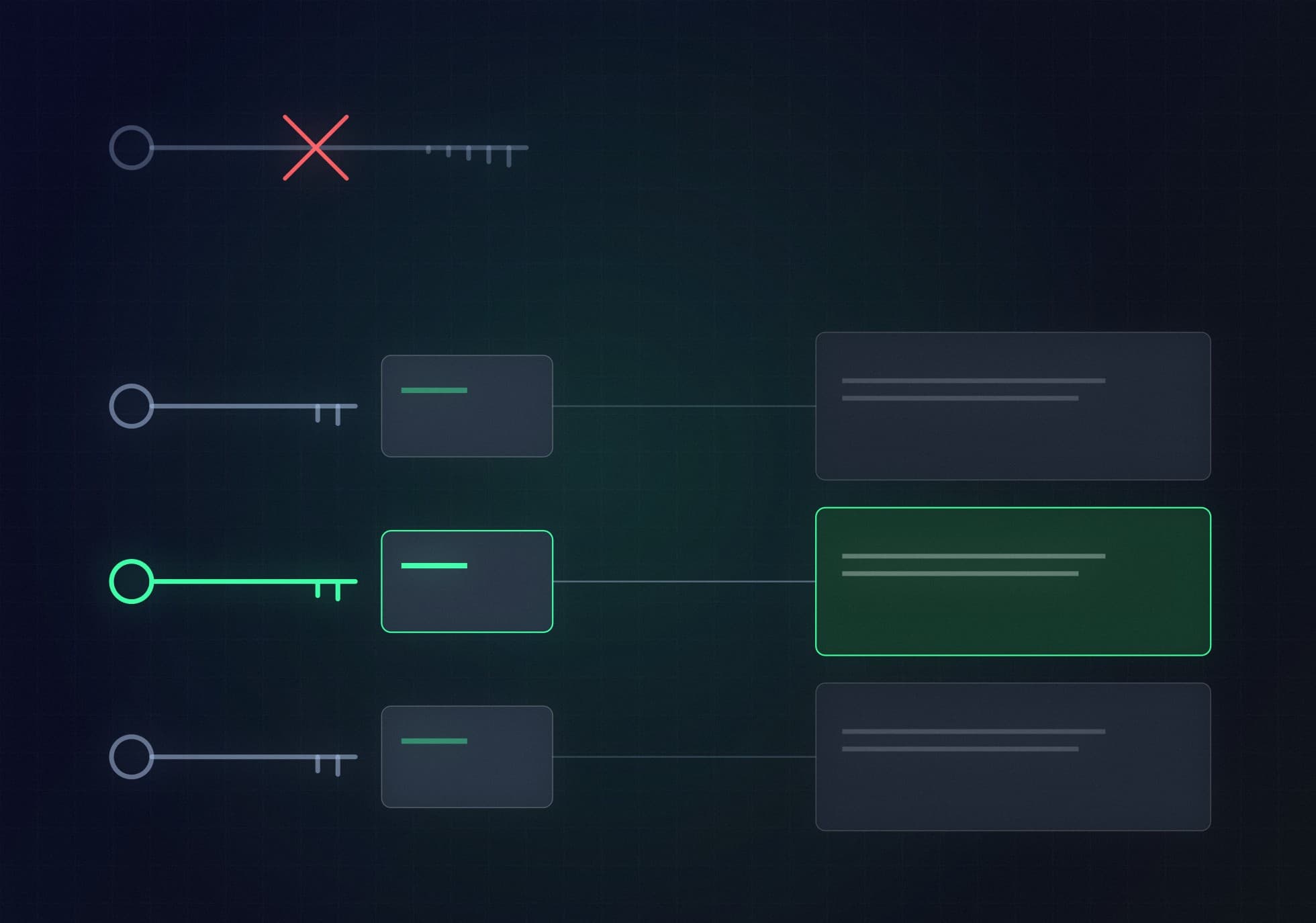
A dashboard is protected by granting or removing access for a group of people. An agent acts on behalf of different users, with different permissions, sometimes in the same session.
That pushes access control from the edge — who opens the panel — into the product itself: which rows may this request see, based on who originated it. Without that shift, the agent becomes a shortcut to data the user could not see, and nobody finds out until the audit. It connects directly to what we explained about agent identity and scope.
Cost per query appears out of nowhere
A product queried twenty times a day and one queried twenty thousand times have the same design and very different bills. When an agent enters the picture, patterns that were irrelevant — recomputing everything on each query, no caching, exposing the full table — become the largest line item of the project.
Worth measuring from day one, with the same standard we apply to the agent's cost per transaction.
What does not change
Three things stay the same, and it is worth remembering because that is where the real work is:
- It still needs an owner. A product with nobody responsible goes stale regardless of who consumes it.
- It still needs lineage. When the agent returns a wrong figure, the question is where it came from.
- It still needs agreed definitions. If two departments cannot agree on what an active customer is, the agent will not settle it either.
How Galde can help
We review existing data products against these four demands before connecting an agent to them, and we leave the contract, the freshness and the permissions written down and verifiable. It is the natural continuation of our work in data governance in Palantir Foundry.
Conclusion
The temptation, when an agent fails, is to change the model. The problem is almost always one floor below: a data product designed to be looked at by a person, now consumed by a machine that does not ask, does not doubt and does not warn.
Fixing that is not glamorous. It is what makes the agent work.
Frequently asked questions
What is a data contract and why does it matter more with agents?
It is the explicit specification of a data product: fields, types, meanings and behaviour when values are missing. It matters more with agents because an unannounced change does not produce a question, it produces a confident wrong answer.
Do existing data products need rebuilding?
Not necessarily. They need reviewing against four demands — contract, freshness, per-consumer permissions and cost per query — and fixing only what the use case requires.
How do permissions work if the agent acts for several users?
By moving control from the access point into the product itself, so each request is filtered according to who originated it. Otherwise the agent becomes a shortcut to restricted data.